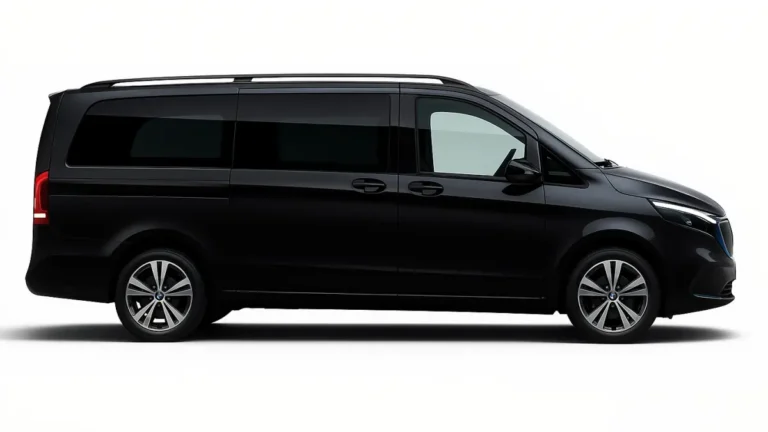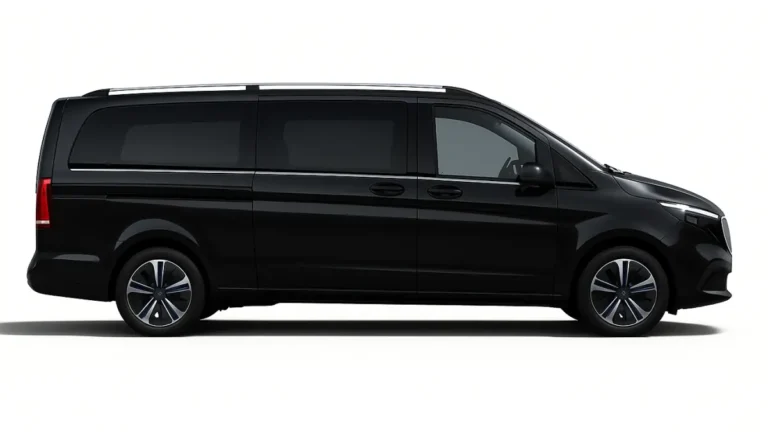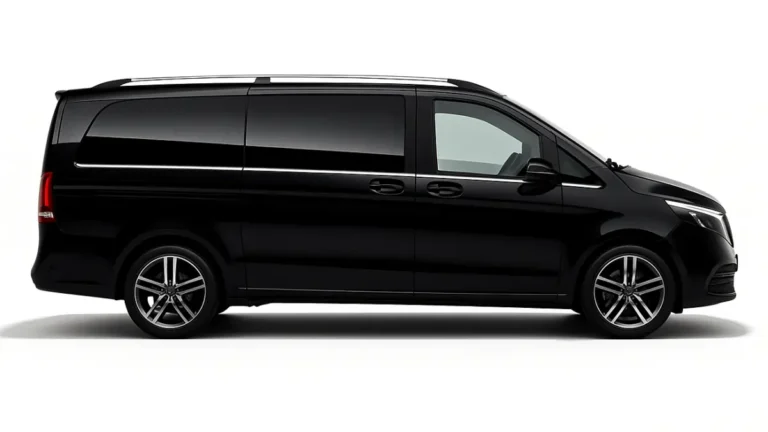
Introduction: taxi or minivan for a small group in Berlin?
For one to three people, a regular taxi can be completely suitable for many journeys in Berlin. A short city trip with light luggage does not automatically require a larger vehicle. The decision changes, however, when the group has several suitcases, a pushchair, child seats, bulky items or a route with multiple stops.
The useful comparison is therefore not “small vehicle versus large vehicle”. It is whether the selected vehicle can handle the complete journey without squeezing luggage into the passenger area, separating the group or creating uncertainty at pickup.
This guide compares taxi and minivan travel specifically for one to three passengers. It explains when a taxi is the practical choice, when the additional space of a minivan matters and which details should be checked before booking. Larger groups of four or more passengers are a separate calculation and are not the focus here.
Situations where a small group can still face vehicle problems
Three passengers do not always mean three small bags
A vehicle may have enough passenger seats but insufficient luggage capacity. This is common after an airport arrival when each passenger has a large suitcase and cabin bag. A pushchair, wheelchair, golf bag or other bulky item can reduce the usable boot space further.
When luggage cannot be loaded safely, the group may need another vehicle or may have to travel with bags in an uncomfortable position. Describing the luggage before booking is more important than relying on passenger count alone.
Child seats change the usable cabin
One or two child seats can make a standard rear bench feel significantly smaller. The adults may technically fit, but the journey can become uncomfortable, especially when winter clothing, backpacks and hand luggage are also in the cabin.
A minivan can provide a more flexible seating layout. Child seats still need to be requested and confirmed in advance, but the additional room can make entry, fastening and luggage loading easier.
Several stops make a simple trip more complex
A direct journey from one address to another is different from collecting a passenger, stopping at a hotel and continuing to a restaurant or airport. With every additional stop, easy entry, luggage access and clear seating become more important.
For a short direct city trip, a taxi may remain the most practical option. For a route involving luggage and several addresses, a minivan can reduce repeated loading and rearranging.
Taxi or minivan: which option fits which journey?
When a taxi is usually sufficient
A taxi is often suitable when:
- one to three passengers are travelling with light luggage;
- the route is direct and relatively short;
- no child seats or unusual equipment are required;
- the passengers can travel comfortably in a standard car;
- the journey is spontaneous and does not need detailed preparation.
In this situation, booking a larger vehicle only for additional space may not be necessary. The main requirement is simply that the passengers and bags fit safely.
When a minivan becomes the practical choice
A minivan can be more suitable even for two or three people when:
- there are several large suitcases and cabin bags;
- a pushchair, wheelchair or sports equipment must be transported;
- one or more child seats are required;
- the passengers prefer easier entry and more personal space;
- the route includes several stops or hotel collections;
- the journey follows a long flight or continues beyond Berlin.
The reason is not passenger capacity alone. It is the combination of cabin space, luggage access and easier organisation.
Why price should not be compared without the full route
A meaningful comparison requires the same pickup, destination, timing and luggage assumptions. A direct taxi trip and a pre-arranged minivan transfer may include different planning and pickup arrangements.
Before choosing, compare the complete service rather than only the first number shown. Confirm whether the journey is direct, whether stops are included, whether child seats have been requested and which vehicle category is expected.
What the additional minivan space changes
Luggage can remain separate from passengers
The most immediate advantage is often not luxury but organisation. A larger luggage area reduces the need to place bags around the passengers. This makes the cabin calmer and helps keep small items accessible during the journey.
For airport transfers, provide the number of large suitcases, cabin bags and bulky items. A minivan is not unlimited, so accurate information is still required.
Entry and seating can be easier
Sliding doors and a higher cabin can make entry easier for children, older passengers and people carrying bags. The seating layout may also allow passengers to sit without placing every small bag on their laps.
This can matter on longer journeys or after an overnight flight, when comfort and easy movement are more valuable than they would be during a brief city ride.
The group can keep one travel plan
For one to three passengers, splitting into several vehicles is rarely necessary, but an unsuitable small vehicle can still create that outcome when luggage does not fit. Choosing the correct vehicle in advance keeps passengers, bags and arrival timing together.
One vehicle is also easier when the route contains more than one address. Everyone follows the same stop sequence, and there is one contact point for the journey.
Special requirements can be planned before pickup
Child seats, mobility equipment and unusual luggage should be confirmed before the vehicle is dispatched. A larger vehicle may provide more flexibility, but it does not replace accurate booking information.
The best choice is the smallest vehicle category that safely and comfortably meets the real requirements. Sometimes that is a taxi. Sometimes a minivan is justified even for a single passenger.
Practical checklist for one to three passengers
Use this checklist before deciding between a taxi and a minivan.
- Passengers: one, two or three people, including children.
- Large luggage: number of full-size suitcases.
- Cabin bags: backpacks, laptop bags and hand luggage.
- Bulky items: pushchair, wheelchair, sports gear or instruments.
- Child seats: number required and children’s ages or sizes.
- Route: exact pickup and destination addresses.
- Stops: any hotel, office or private-address stops on the way.
- Journey length: short Berlin trip, airport transfer or longer route.
- Comfort needs: easier entry, additional legroom or working space.
- Timing: flight, meeting, train or event deadline.
Choose a taxi when the journey is simple and everything fits comfortably. Choose a minivan when the additional room solves a real luggage, seating or route-planning requirement.
How to confirm the correct vehicle
Send passenger and luggage details before choosing
A correct recommendation requires more than the number of travellers. Send the pickup, destination, passenger count, suitcase count and any bulky items or child-seat requirements.
For a light and direct journey, a taxi may be enough. When luggage volume, child seats, comfort or multiple stops change the setup, a minivan may provide the more reliable plan.
Your next step: provide the complete journey details in one message. The required capacity can then be checked before booking so that the selected vehicle fits both the passengers and their luggage.