Introduction: saving time to BER is mostly about removing “small delays”
When you’re departing from Berlin Brandenburg Airport (BER), the biggest time losses are rarely the obvious ones. It’s the small delays that stack up:
waiting for a taxi, walking with luggage from the wrong drop-off point, searching for the right terminal entrance, getting stuck because one person is late,
or realising too late that you still need to print something or repack liquids. A well-planned MPV (people carrier) transfer can remove
many of those hidden delays — especially for families, groups, and business travellers on a schedule.
This guide focuses on practical ways to save time when travelling to BER with an MPV: the typical problems that make people late, how an MPV compares to other options,
what a time-efficient transfer plan looks like, and a copy-and-use checklist you can follow before you leave. The goal is simple: arrive calm, not rushed.
Typical time-wasters on the way to BER (and how they happen)
People usually miss time to the airport in predictable ways. The pattern is almost always the same: one small issue creates a chain reaction.
If you can remove the first weak link, the whole journey becomes faster and calmer.
Scenario 1: “We’ll leave at X” — but the group isn’t ready at X
For groups and families, the real departure time is rarely the planned one. Someone is finishing packing, a child needs the toilet,
someone can’t find a passport, or you need to reorganise luggage. When you’re relying on public transport timetables or a last-minute taxi,
a five-minute delay can cost you a whole connection or create a stressful rush.
Scenario 2: waiting for transport (and losing control of the schedule)
The moment you start waiting — for a taxi, for a train, for a connection — you lose control of timing. Even if the waiting time is not huge,
it adds uncertainty. On departure day, uncertainty is the enemy because it increases stress and reduces buffer time.
Scenario 3: luggage slows down every transfer and every walk
Heavy luggage makes people move slower. If your route includes station walks, stairs, platform changes, or multiple segments, you lose time at each step.
The worst part is that you can’t easily “make up time” later because luggage sets your walking speed.
Scenario 4: wrong drop-off or unclear terminal entrance
Arriving at BER is not the finish line. You still need to enter the terminal, find your airline area, and get to check-in or security.
If you’re dropped off at an inconvenient point, you waste time walking with luggage. For families and groups, that walk feels even longer.
Scenario 5: small airport tasks left for the last minute
A surprising number of “we were late” stories involve non-transport problems: forgetting to check in online, liquids not packed properly,
duty-free questions, battery packs, or confusion about which terminal area to use. A time-saving transfer plan also includes a quick pre-departure check.
MPV vs taxi vs public transport: what saves time in real life
Berlin gives you multiple ways to reach BER. The fastest option “on paper” is not always the fastest in real life.
Time savings usually come from predictability and fewer steps, not just speed.
Public transport: fast when everything lines up, slower when you miss one link
Trains can be efficient — but only if you catch them. If you miss one connection, the whole plan shifts.
Public transport also includes extra time for walking to stations, waiting, transfers, and the last mile inside the terminal.
With heavy luggage or a group, those steps multiply.
Standard taxi: simple, but not always predictable
A taxi can be quick when it’s immediately available and the vehicle fits your luggage. The problem is that availability and vehicle size are not always guaranteed
at the exact moment you need them, especially for groups. If you end up waiting or splitting into two cars, you lose time and coordination becomes the task.
MPV (people carrier) transfer: predictable time savings through one plan
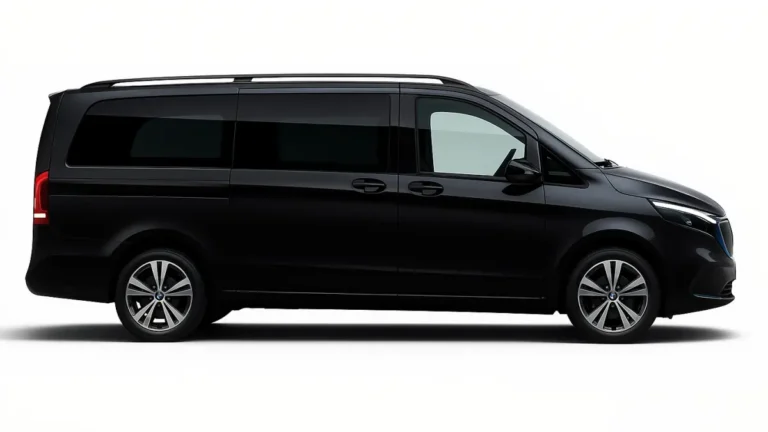
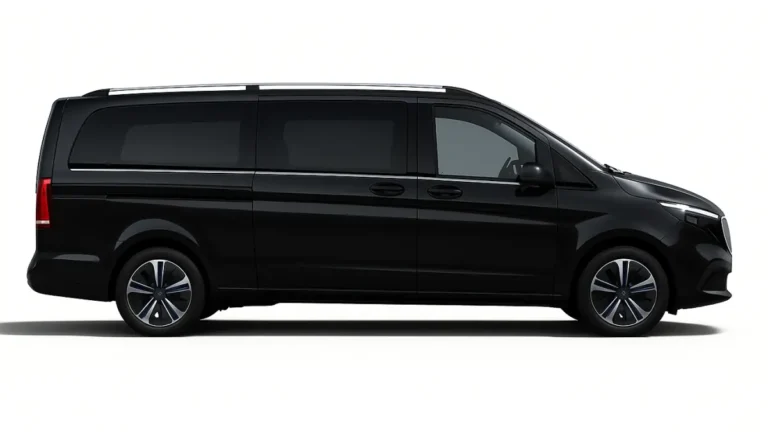
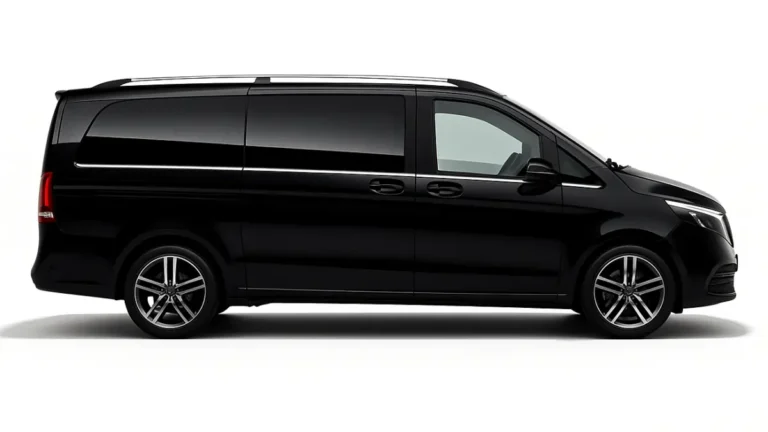
An MPV transfer saves time because it reduces steps: one pickup, one vehicle that fits passengers and luggage, and direct travel to the correct airport drop-off point.
For families and groups, the time saved is often not minutes of driving — it’s avoiding waiting, transfers, and coordination delays.
Quick decision rule for departures
If you travel light and your route has no sensitive connections, public transport can work. If you need maximum predictability, a group-friendly vehicle,
and fewer moving parts, an MPV transfer is usually the most time-efficient choice.
How our MPV departures to BER are planned for speed and predictability
The goal for an airport departure transfer is simple: arrive on time without rushing. We plan for the real travel day, not an idealised schedule.
That means realistic pickup timing, confirmed luggage capacity, and a clear plan that avoids last-minute surprises.
Pickup time is built around your “must arrive by” goal
Instead of guessing, we work backwards from your flight schedule and your “arrive at BER by” time. This helps protect buffer time for check-in,
security, and walking inside the terminal — especially important for families and group travel.
Vehicle fit is confirmed so you don’t lose time loading or reorganising
When the MPV truly fits your passengers and luggage, loading is quick and calm. Nobody is repacking bags at the curb or squeezing luggage onto seats.
For departure day, that small efficiency matters.
Clear pickup coordination for groups and families
Groups lose time when they are not ready at the pickup moment. We recommend one main contact person and a simple “everyone ready” rule
so the MPV can depart on time. This is an easy way to prevent the most common departure delay.
Practical time-saving checklist before leaving for BER
Use this checklist before your departure transfer. It focuses on the details that save time in real life, not on theoretical travel speed.
- Set a real “ready time”: choose a time when everyone is already downstairs with luggage, not when packing is still happening.
- Confirm the “arrive by BER” goal: decide when you want to be at the terminal entrance (not just “flight time”).
- Share passenger + luggage details: include bulky items so the MPV fit is correct and loading is fast.
- Use one main contact person: one phone/WhatsApp number to avoid mixed messages at pickup.
- Keep essentials accessible: passports, boarding passes, chargers, medicines — not buried in suitcases.
- Do a 60-second airport check: online check-in done, liquids packed, batteries/power banks ready, terminal/airline confirmed.
- Plan for the last 10 minutes: know where you want to be dropped off (terminal entrance) and be ready to move inside quickly.
- Don’t overfill the schedule: avoid adding “one quick stop” unless it’s confirmed — small detours often break timing.
When these points are handled before you leave, the transfer becomes what it should be: predictable, quick, and calm.
How to lock in a smooth departure plan
Share your flight time and “arrive by” goal — and let the plan work backwards
If you want to save time on departure day, the biggest win is removing uncertainty. Send your flight details, pickup address,
passenger count, luggage list, and the time you want to be at BER. That allows a clear pickup time and MPV setup to be confirmed in advance
— so you’re not relying on last-minute decisions.
This is especially useful for:
- Families: fewer steps, less rushing, and calmer airport arrival.
- Groups: one vehicle and one plan, avoiding split rides and coordination delays.
- Business travellers: predictable timing and a clean schedule to the airport.
Your next step: send your pickup location, flight time, desired arrival time at BER, passenger count, and luggage details.
We’ll confirm a time-efficient MPV transfer plan so you reach the airport calmly and on schedule.