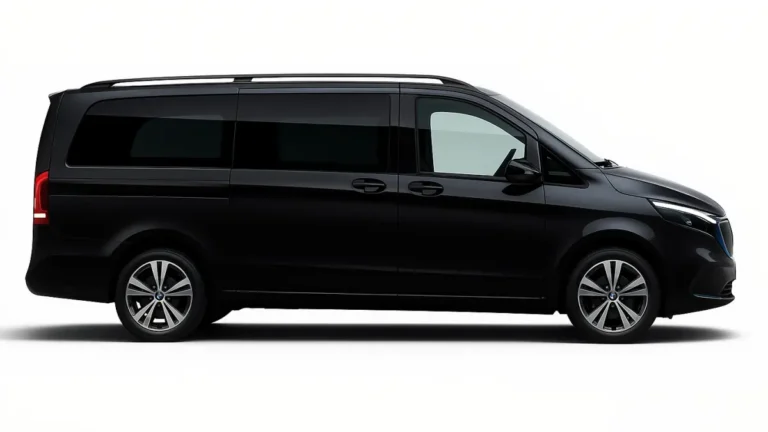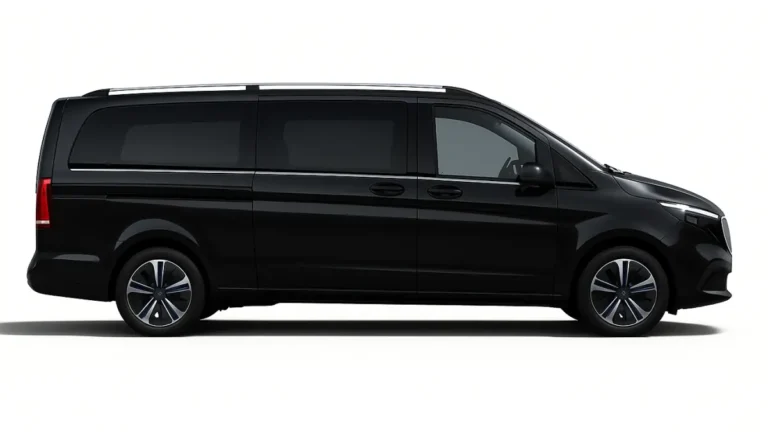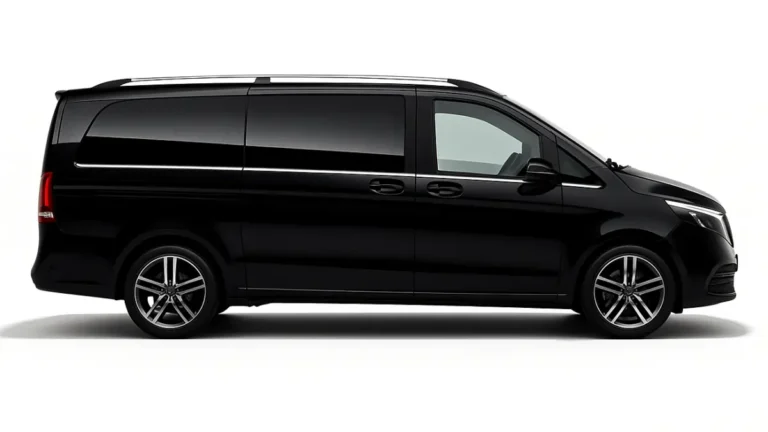
Introduction: the real question in Berlin is comfort vs complexity
Berlin is one of those cities where public transport can be genuinely convenient — until your trip turns “real”.
Add heavy luggage, children, late arrivals, a group that needs to stay together, or a strict schedule, and the decision changes quickly.
The choice is not only about speed or price. It’s about how much complexity you’re willing to handle on the day.
In this guide, we’ll compare MPV (people carrier) transfers and Berlin public transport in practical, travel-day terms.
You’ll see the typical scenarios where each option works best, what usually goes wrong, and how to decide quickly based on your route,
passengers and luggage. At the end, you’ll find a checklist you can copy and use before you travel.
Typical problems with public transport and transfers in Berlin
Berlin’s U-Bahn and S-Bahn network is strong, but it’s not a magic solution for every travel setup. Most negative experiences happen
when travellers underestimate transfers, walking distance, luggage handling, and the “last mile” from a station to the real address.
Here are the scenarios that create stress most often.
Scenario 1: luggage turns a simple route into hard work
If you travel light, public transport can feel easy. With multiple suitcases, a stroller, or bulky bags, it becomes a logistics task:
lifting, moving through corridors, finding elevators, and keeping track of everything. On a busy day, it can be tiring even before you reach your hotel.
Common issues include:
- long walks between platforms and exits with heavy bags;
- crowding that makes it hard to keep luggage under control;
- stress when you need to board quickly or make a tight connection.
Scenario 2: families and tired children don’t “fit the timetable”
Travelling with children changes everything. After a flight to BER, children are often tired, hungry, or overstimulated.
Public transport requires patience: waiting, transfers, and walking. If you need a child seat or simply want a calm environment,
the “fastest route on paper” may not feel fast at all.
Scenario 3: groups split up and coordination becomes the main task
Groups naturally spread out in stations and on platforms. One person walks slower, someone waits for an elevator, someone stays behind with luggage.
If the group is not together, even a short transfer can become confusing. And once you’re separated, the plan becomes messages and guessing instead of travel.
Scenario 4: late-night arrivals and less frequent connections
At night, public transport can still work, but it may require more waiting and more transfers. After a late arrival at BER, travellers often want a direct solution.
In those moments, predictability and comfort matter more than “doing it the cheapest way”.
Scenario 5: the last mile is underestimated
A station-to-station route can look perfect, but you still need to reach your exact address. Hotels may have entrances on side streets, apartments may be inside courtyards,
and business venues may have specific drop-off points. The last mile often becomes a separate task — especially with luggage or poor weather.
MPV vs public transport: which option fits which trip
The right choice is usually obvious when you look at three factors: luggage, group needs, and timing pressure.
Here’s a practical comparison you can apply to most Berlin trips.
Choose public transport when your trip is “light and flexible”
Public transport is a great option when you travel solo or as a couple, carry light luggage, and don’t need a strict arrival time.
It’s also ideal when you’re comfortable with transfers and you enjoy moving around like a local.
Choose an MPV transfer when your trip is “heavy, tired or time-sensitive”
An MPV (people carrier) transfer is the easiest option when you have heavy luggage, children, a group that needs to stay together,
or a late arrival from BER. It reduces complexity: one vehicle, one plan, door-to-door travel. You avoid transfers, platform changes, and the last-mile problem.
Families: comfort and safety are part of the “best choice”
For families, the decision often comes down to energy and safety. If you need child seats, want a calm cabin, and don’t want to manage a stroller on platforms,
an MPV transfer is usually the practical choice. For short inner-city hops without luggage, public transport can still be great.
Groups: staying together is the hidden advantage
If you’re travelling as a group, the real benefit of an MPV is not “luxury” — it’s coordination. Everyone stays together, luggage stays organised,
and you don’t lose time reconnecting after transfers. Public transport can work for groups only when travel is simple, light, and very flexible.
Quick decision rule (works on arrival day)
If you can carry everything comfortably and you don’t mind transfers, public transport is a good choice. If your travel setup requires coordination,
comfort, or predictability, an MPV transfer will feel significantly easier.
How our MPV transfer solves the “hard parts” of Berlin travel
The hardest part of travel is rarely the middle of the route — it’s the edges: arriving at BER, managing luggage, keeping a group together,
travelling late at night, and reaching the correct entrance at the destination. Our MPV service is designed to make those moments simple.
BER pickup clarity and a calm start to your stay
A clear pickup plan matters most when you’ve just landed. We focus on simple meeting instructions, a straightforward contact method,
and a vehicle that fits passengers and luggage comfortably — so you leave the airport with one plan, not guesses.
Family and group readiness
For families, child seat needs must be confirmed properly (ages/weights, number of seats). For groups, luggage capacity must be realistic.
We confirm these details upfront so the ride starts organised, not chaotic.
Door-to-door travel that avoids the last-mile problem
With an MPV transfer, you travel directly to the correct address. No transfers, no platform changes, and no separate “final taxi” needed.
This is especially useful for late arrivals, bad weather days, or destinations where entrances and access can be confusing.
Practical checklist: how to choose in 2 minutes
Use this checklist to decide quickly whether public transport or an MPV transfer is the better option for your Berlin journey.
- Luggage: Can you carry everything comfortably through stations and transfers?
- Passengers: Are you travelling solo/couple, or do you need to keep a group together?
- Children: Do you need child seats, a stroller, or a calmer environment after landing?
- Timing: Do you have a strict “arrive by” time (meeting, check-in, event)?
- Arrival time: Are you arriving late at night or very early when you want maximum predictability?
- Last mile: Is your destination easy from a station, or does it require walking with luggage?
- Energy level: After a flight, do you want simplicity more than flexibility?
- Route complexity: Does your public transport route include multiple transfers or long walks?
If most of your answers point to “complex”, choose an MPV transfer. If most answers are “easy”, public transport will likely work well.
How to secure a calm plan for your Berlin journey
Share your route details once — and remove travel-day guesswork
If you’d rather avoid transfers, luggage stress, and the last-mile problem, the simplest approach is a clear MPV plan:
pickup point, destination address, passenger count, and luggage details. That’s enough to confirm a comfortable door-to-door ride
— especially from BER or for group and family travel.
This is especially useful for:
- Families: less stress with children, luggage and timing — especially after landing.
- Groups: everyone stays together and arrives organised.
- Late arrivals: one direct plan instead of waiting and transfers.
Your next step: send your pickup location, destination address, passenger count, luggage list, and any child seat needs.
We’ll confirm a simple transfer plan so you can start your Berlin trip calmly.