Introduction: BER routes are not “one Berlin” — they’re dozens of different trips
“BER to Berlin” sounds like one simple route, but in practice it’s a whole map of very different journeys. A transfer to Mitte is not the same
as a ride to Charlottenburg, Köpenick, or Spandau. And if you’re heading into Brandenburg — Potsdam, Babelsberg, the lakes, or smaller towns —
the best route and timing depend on traffic, ring-road segments, and where your address sits in the local street layout.
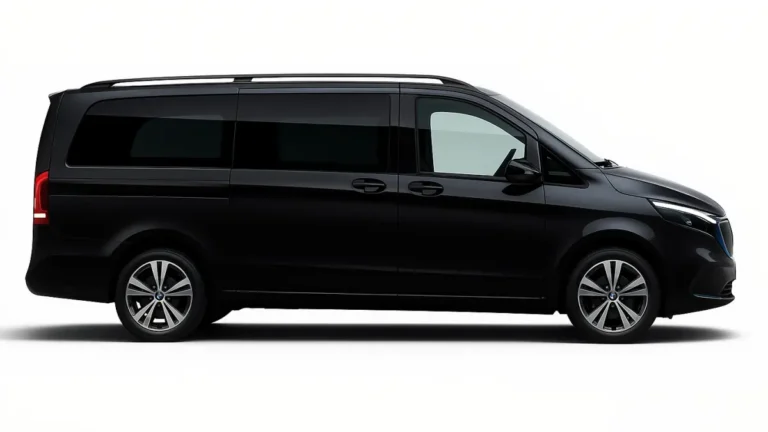
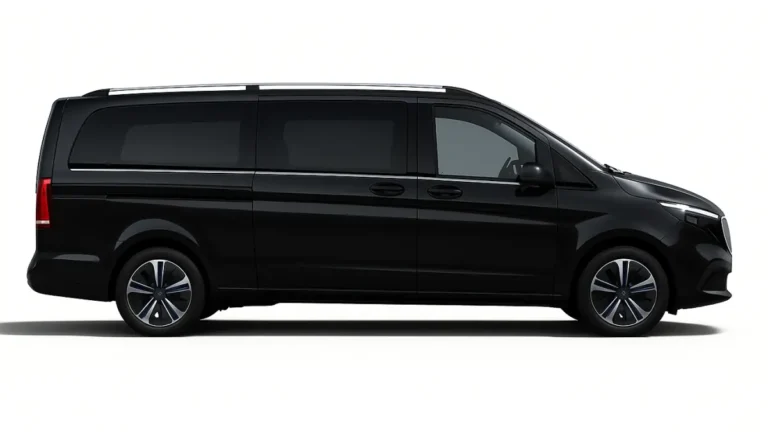
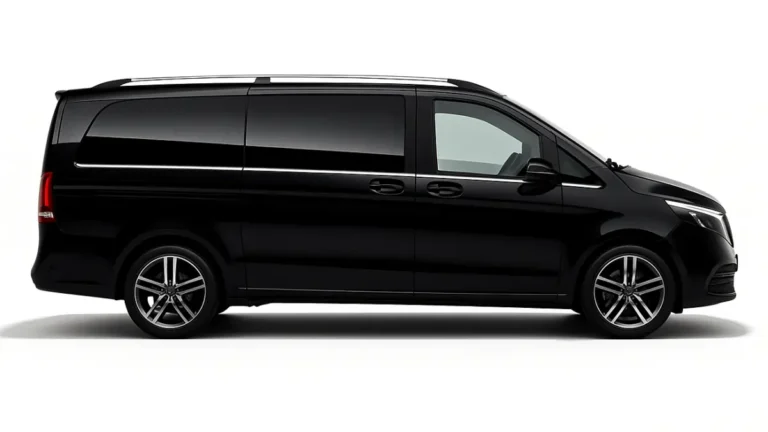
This overview explains how to think about BER Airport MPV routes across Berlin and Brandenburg in a practical way: what typically
goes wrong, what to choose between public transport, taxi, and an MPV (people carrier), and how to share the right details so your
route is planned correctly. At the end, you’ll find a checklist you can copy and use for booking.
Typical problems when planning BER routes (Berlin & Brandenburg)
The most common BER transfer problems are not about distance — they’re about wrong assumptions. Travellers often treat “Berlin” as one destination,
underestimate luggage and walking time, or forget that the last kilometre (hotel entrance, courtyard, gated street) can be the tricky part.
These are the scenarios that create delays and stress.
Scenario 1: “Berlin centre” is not a real address
Many bookings start with a vague destination: “Berlin centre”, “near Alexanderplatz”, “Mitte area”. That’s not enough to plan a clean route,
especially if you’re aiming for a specific arrival time, meeting, or check-in. Berlin districts vary in access, traffic behaviour, and pickup/drop-off ease.
What typically goes wrong:
- the driver plans for one side of a district, but the address is on the other side;
- the drop-off point is unclear (hotel entrance vs side street vs courtyard);
- time buffers are planned too tightly, especially during busy hours.
Scenario 2: ring roads and “event traffic” change everything
Many routes from BER depend on how the ring segments behave on the day. When Berlin hosts large events (trade fairs, stadium events, concerts),
traffic patterns can change quickly. A route that looks perfect on a map can become slow if it crosses a congested corridor at the wrong time.
Scenario 3: Brandenburg destinations are often “simple” — until the last mile
Brandenburg trips can feel straightforward because the roads are less dense than inner Berlin. The surprise comes at the end: private addresses,
holiday homes, lake areas, hotel entrances, or destinations where navigation can be ambiguous (two similar street names, long driveways, gated access).
Without clear address details and notes, the last five minutes can become the most annoying part of the ride.
Scenario 4: multi-stop reality (keys, groceries, family pickup)
A “single route” often becomes a small chain: pick up keys, stop at a supermarket, drop one person first, then continue. If this is not mentioned up front,
your plan becomes improvisation. For families and groups, improvisation after a flight is rarely enjoyable.
Scenario 5: luggage and seating layout aren’t confirmed
The route might be correct, but the vehicle choice is wrong: too many suitcases, a stroller, or special items that were not included in the booking.
With an MPV, the advantage is space and comfort — but only if the luggage reality is confirmed in advance.
Public transport vs taxi vs MPV: what makes sense by route type
The best option depends on your route pattern. A short ride to a central district is one case. A late arrival with luggage is another.
And Brandenburg routes have their own logic. Here’s a practical way to choose without overthinking it.
Public transport: strong for light travel and simple Berlin routes
For solo travellers or couples with light luggage, Berlin’s rail network can be efficient. It often works well when you don’t mind transfers
and your destination is close to a station. The downsides appear when you travel as a group, carry heavy luggage, arrive late, or need a direct last mile.
Standard taxi: fine for simple point-to-point rides, limited for groups and special needs
A taxi can be a practical choice for a straightforward Berlin ride with standard luggage. Limitations show up when you need guaranteed capacity,
want to keep everyone together, require child seats, or plan a multi-stop route. In those cases, “simple” can quickly turn into “not enough space”.
MPV (people carrier): best for capacity, clarity, and keeping the plan together
An MPV is the easiest option when the route is only part of the challenge — and the real challenge is passengers + luggage + coordination.
This applies to families, groups, business travel, and Brandenburg routes where the last mile matters. The advantage is not only comfort,
but a clear plan: one vehicle, one pickup, one route, and the group stays together.
Route-based decision rule (quick and practical)
Choose public transport if you travel light and your destination is easy by rail. Choose a taxi for a simple Berlin ride with minimal requirements.
Choose an MPV when you have a group, children, heavy luggage, a late arrival, or a Brandenburg destination where direct last-mile access is important.
How our MPV route planning works (districts, towns, multi-stops)
A smooth BER transfer starts with correct route framing. We plan routes as “real destinations”, not as generic areas. That means confirming the exact address,
understanding your route type (Berlin district vs Brandenburg town vs multi-stop), and matching the MPV to your passenger and luggage reality.
Berlin districts: confirmed address first, then route logic
Berlin routes vary by district and access. Common destinations include Mitte, Prenzlauer Berg, Friedrichshain, Kreuzberg, Neukölln, Charlottenburg,
Wilmersdorf, Schöneberg, Spandau, and Köpenick. The key is not the district name — it’s the exact address and the practical drop-off point.
With clear details, the route becomes predictable and calm.
Brandenburg destinations: clear last-mile notes
Brandenburg routes often include Potsdam and Babelsberg, as well as surrounding towns and lake areas where entrance details matter.
If your destination has a gate, a long driveway, a holiday-home complex, or late check-in instructions, it’s best to share that up front
so arrival is smooth and doesn’t turn into searching in the dark.
Multi-stop routes: confirmed as a plan, not an “on-the-way idea”
If you need extra stops (keys, groceries, family pickup, second hotel), we confirm the sequence so the route stays organised.
This is especially useful for families and groups: less negotiation, less confusion, and everyone stays on the same plan.
Practical checklist for BER routes (copy and use)
Copy this checklist into your booking message. It helps confirm the route correctly across Berlin districts and Brandenburg destinations,
and it prevents the most common “we didn’t mention that” problems.
- Route type: Berlin district (exact address) or Brandenburg destination (exact address + town name).
- Addresses: pickup at BER + destination with postcode (add hotel name if applicable).
- Passengers: number of adults + number of children (and any mobility needs).
- Luggage: large suitcases + cabin bags + bulky items (stroller/pram, sports gear, instruments).
- Child seats (if needed): ages + weights + how many seats + any preference like ISOFIX.
- Timing goal: “arrive by” time if you have a meeting/check-in/event.
- Flight info: flight number + landing time (helps coordinate pickup timing).
- Destination access notes: gate code, reception hours, key pickup, courtyard entrance, or “best drop-off point”.
- Stops: any extra stop requests (confirm in writing so the route is planned properly).
- Contact: one phone/WhatsApp number reachable on the travel day for fast coordination.
With these details, your BER route becomes a clear plan — whether you’re heading into central Berlin or out into Brandenburg.
How to get the right route confirmed without confusion
One message with the checklist — and your route becomes predictable
If you want a smooth BER transfer, the fastest way is to send all route details at once: exact address, passengers, luggage, timing goal,
and any special notes (child seats, extra stops, destination access). That allows the route to be confirmed correctly — for Berlin districts
and for Brandenburg destinations where the last mile matters.
This overview is especially useful for:
- Families: child seats and luggage are planned upfront, so arrival day stays calm.
- Groups: everyone travels together, with organised seating and enough space.
- Brandenburg trips: direct access and clear last-mile notes prevent searching and delays.
Your next step: send your BER flight details, destination address (Berlin or Brandenburg), passenger count, luggage list,
and any child seat or stop requests using the checklist above. We’ll confirm the route plan and keep the journey simple.