Introduction: the “hybrid” way to move around Berlin without stress
Berlin’s public transport is excellent — until you add real-life factors like heavy luggage, tired kids, a late arrival,
a tight timetable, or a group that needs to stay together. That’s where a hybrid approach works best:
use public transport for the fast middle part, and combine it with an MPV (people carrier) transfer
for the parts that are difficult, unpredictable, or simply exhausting.
This guide explains when it makes sense to mix an MPV transfer with the U-Bahn/S-Bahn/tram, how to avoid common mistakes,
and how to build a plan that stays calm even if something changes (delays, closures, tired passengers).
You’ll also get a practical checklist you can use before your trip — especially useful for BER arrivals, families, and groups.
Typical problems when combining transport in Berlin
Mixing transport sounds simple: “We’ll take the train, then a transfer.” In practice, hybrid travel fails when the handover
points are poorly chosen, timing is too tight, or basic comfort and access are ignored. Here are the most common scenarios.
Scenario 1: the “handover station” is inconvenient in real life
A station may look perfect on a map but be frustrating with luggage or children. Some interchanges require long walks,
multiple level changes, or crowded corridors — and that’s before you add a stroller, suitcases, or a tired group.
Typical issues:
- too many stairs or long walks between platforms;
- crowding at peak times, making it hard to keep the group together;
- unclear pickup point outside (multiple exits, confusing landmarks).
Scenario 2: timing is planned “on paper”, not on a travel day
The biggest mistake is planning with zero buffer: train arrival time equals pickup time. In Berlin, small changes happen:
a delayed train, an elevator detour, a child needing a toilet stop, or simply a slower walking pace with luggage.
When you plan too tightly, you either rush (stress), miss the handover (confusion), or lose the comfort you wanted in the first place.
Scenario 3: luggage reality and group coordination
Public transport can be comfortable with light bags. But with multiple suitcases, shopping bags, or sports gear, even one transfer
can feel like a logistics exercise. For groups, another problem appears: people spread out, someone walks slower, someone stays behind,
and the “simple transfer” becomes a coordination task.
Scenario 4: late-night arrivals, early mornings, and low-energy passengers
Hybrid travel is powerful, but it must match the moment. Late at night, when everyone is tired, the “cheapest” or “fastest”
public transport route can become the least comfortable. Early mornings can be similar: you want predictability, not a chain of transfers.
In these cases, using an MPV transfer for the most sensitive part of the journey often makes the whole day feel easier.
Public transport only vs MPV only vs hybrid: what’s smartest
There’s no single best option for every trip. The smartest approach is choosing the right tool for each segment.
Here’s how to decide quickly.
Public transport only: best for simple, light travel
If you’re travelling solo or as a couple with light luggage and flexible timing, Berlin’s public transport can be ideal.
It’s efficient in many areas and gives you freedom without booking ahead.
MPV transfer only: best for comfort, predictability, and groups
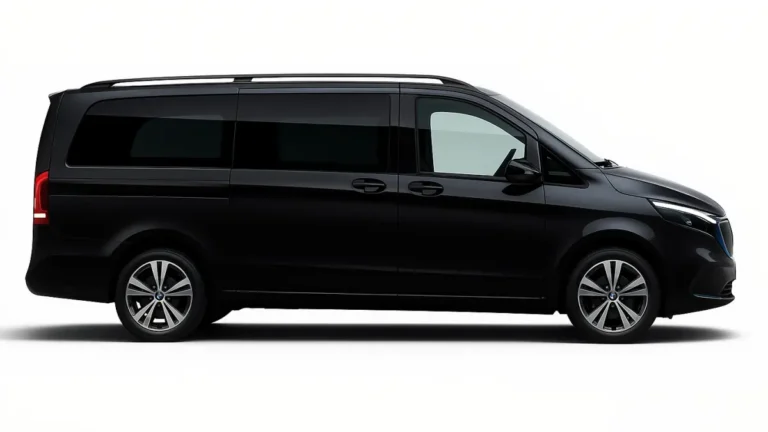
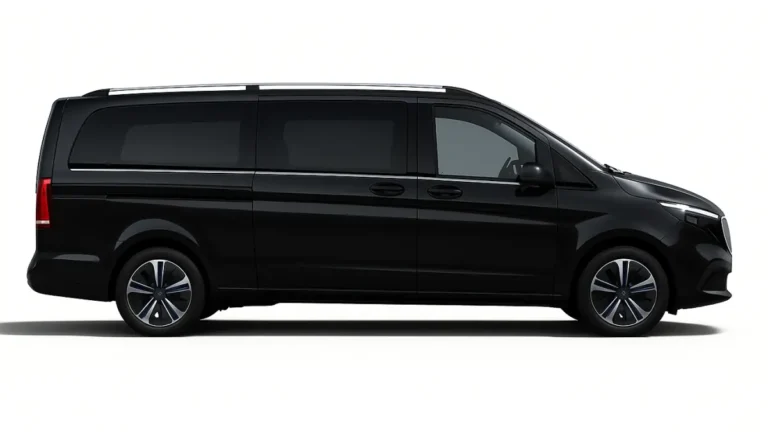
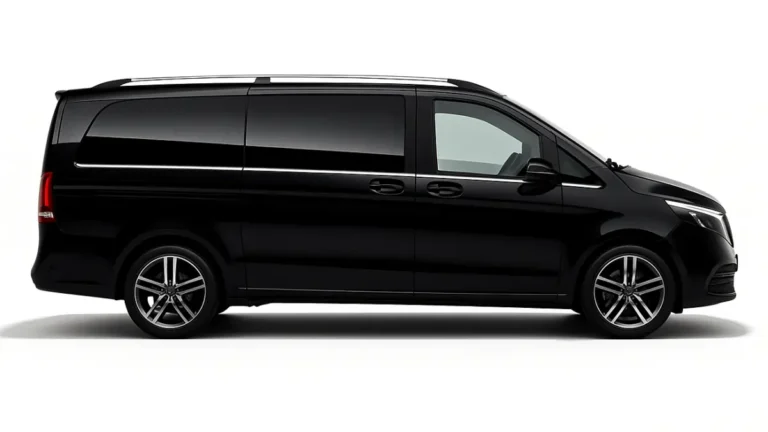
If you have a group, children, heavy luggage, or a strict schedule, an MPV transfer (people carrier) is often the simplest solution:
one vehicle, one plan, door-to-door. It’s also the calmest option after a long journey.
The hybrid approach: best for “fast middle + easy edges”
Hybrid travel is ideal when public transport can do the fast middle part — but you don’t want to struggle with the hardest edges
(airport arrival logistics, late-night last mile, bulky luggage, family setup). Common hybrid patterns include:
- BER arrival → MPV to hotel when landing late or with heavy luggage;
- Hotel → station by MPV, then public transport to avoid central congestion at peak hours;
- Day outing by public transport, then MPV pickup back to the hotel when everyone is tired;
- Group + luggage: keep the group together by MPV to the key point, then use public transport for short inner-city hops.
What makes hybrid travel actually work
The hybrid option succeeds when you choose the handover point wisely, build buffer time, and confirm the pickup plan clearly.
The goal is not to “optimise every minute” — it’s to remove stress while staying flexible.
How our MPV service supports a hybrid travel plan
A hybrid plan is only as good as its handover points and communication. That’s exactly where a reliable MPV service helps:
we make the “edges” of your route simple, predictable, and comfortable.
Pickups at stations and clear meeting instructions
If you plan to switch from public transport to an MPV, we agree on a clear pickup point and timing strategy in advance.
That reduces confusion at busy stations and helps groups stay together.
Group-friendly vehicles and luggage reality
Hybrid travel often happens because of luggage or group needs. We confirm passenger count and luggage details in advance
so you don’t end up improvising at the handover point.
Flexible timing mindset (buffer, delays, real walking speed)
Public transport can shift by a few minutes. Families can need extra time. Groups move slower. We build the plan around
realistic travel conditions — not “perfect timing on paper” — and keep communication simple on the day.
Practical checklist for hybrid travel (copy and use)
Use this checklist to plan a smooth MPV + public transport route in Berlin. It’s designed to prevent the most common “handover”
problems and keep your trip calm even if something changes.
- Choose one clear handover point.
Pick a station or landmark that’s easy to explain and easy to exit with luggage (not just “closest on the map”). - Build a buffer window.
Plan with extra time for platform changes, elevators, toilets, and slower walking speed with luggage or children. - Confirm the pickup location in writing.
Agree on the exact exit/side/landmark and keep it in one message that everyone can reference. - Share passenger + luggage details.
Include suitcases, hand luggage, and bulky items (stroller, sports gear). This prevents “fits on seats” chaos. - Keep the group together before the handover.
Decide a simple rule: “we exit together”, or “one person leads, one person stays last”. - Use one main contact person.
One phone/WhatsApp contact avoids mixed messages — especially in noisy stations. - Plan for low-energy moments.
Late night, early morning, tired kids, or elderly passengers: consider using the MPV for the sensitive segment. - Keep essentials accessible.
Documents, medicine, chargers, and snacks should stay with you — not buried under luggage.
If you follow these steps, the hybrid approach becomes what it should be: flexible, efficient, and noticeably less stressful than
“figuring it out on the spot”.
How to plan your route with us (without overcomplicating it)
Tell us your plan — we’ll make the handover points easy
If you want the speed of Berlin’s public transport but also want comfort for the “difficult parts” (luggage, kids, late arrivals,
group coordination), we can help you build a simple hybrid route: where to switch, when to switch, and how to keep pickup clear.
Hybrid travel works best for:
- Families.
Less stress with luggage and timing, especially after landing or at the end of the day. - Groups.
Keeping everyone together for the sensitive segment avoids delays and confusion. - Business travel.
Predictable arrival at meetings, with public transport handling the fast mid-route when appropriate.
Your next step: send your start point, destination, rough timing, number of passengers, luggage details,
and whether you want the MPV at the start, the end, or both. We’ll confirm a clear pickup plan and keep the journey simple.