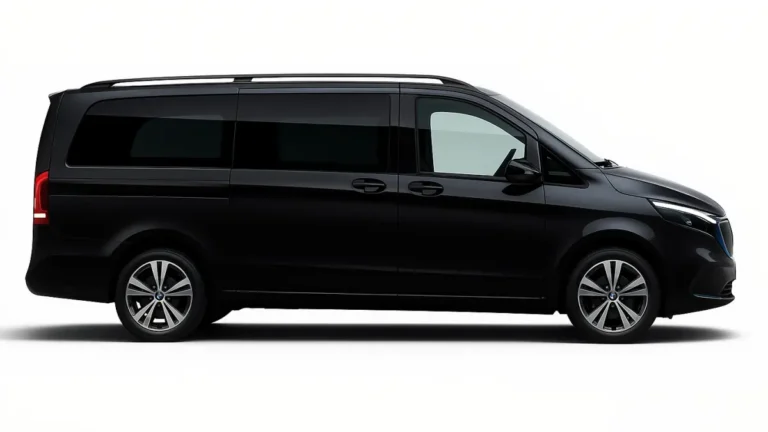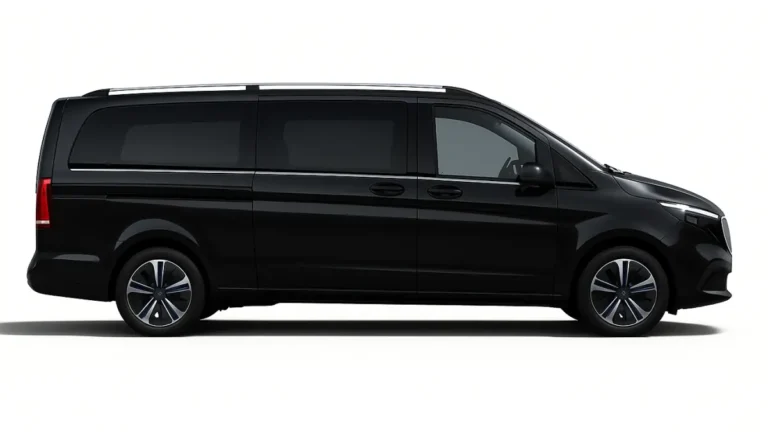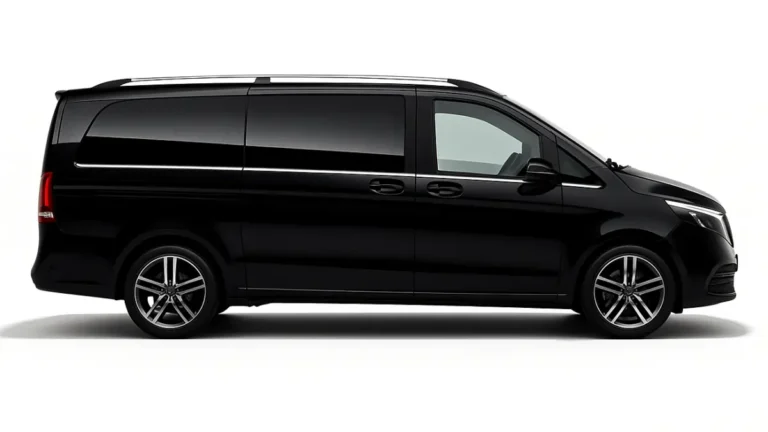
Introduction: for groups of 4+, “cheaper” is not only about the fare
When you travel as a group in Berlin, the real question is often not “MPV or taxi?” but “one plan or several moving parts?”.
From 4 people upwards, splitting into multiple taxis can look cost-effective at first glance — until you add timing drift,
luggage reality, and the risk of arriving in different waves. An MPV (people carrier) can be the simpler option, but only when
it matches your actual group setup.
This guide compares one MPV vs several taxis for groups from 4 people in practical terms: where costs and time are usually lost,
when each option makes sense, how to decide quickly without overthinking, and a copy-and-use checklist you can send to confirm the right plan.
Typical cost traps when groups use several taxis
Groups often pick “two taxis” because it feels flexible and straightforward. The problem is that the hidden costs are not always money.
They’re time, coordination, and the knock-on effects when the group doesn’t arrive together.
Scenario 1: you pay for two rides, but still lose time waiting
Two taxis means two pickup moments. One arrives first, the other arrives later — and the group ends up waiting anyway.
Even if the fare is acceptable, the experience becomes less efficient because your “start time” is no longer one clear moment.
Scenario 2: luggage forces an extra vehicle or compromises comfort
A group of four with cabin bags is one thing. A group of four with multiple large suitcases is another.
If one taxi can’t comfortably take the luggage, you either squeeze bags into the cabin (less comfort) or you add another vehicle (higher total cost).
Scenario 3: timing drift makes the day more expensive
If you’re going to a restaurant booking, a conference slot, a museum entry time, or an airport departure, arriving in separate waves creates friction:
you wait, you reshuffle plans, and you often end up paying indirectly (missed time windows, changed bookings, extra stops).
Scenario 4: “two taxis” becomes “two different routes”
Even if both drivers aim for the same destination, routes differ. One car hits heavier traffic, one finds a quicker corridor,
and now the group is split. If you planned to arrive together, you lose that benefit immediately.
Scenario 5: multi-stop routes become complicated fast
If you have multiple drop-offs across Berlin districts, several taxis can look cheaper — but it becomes a coordination task:
who goes in which car, who is dropped first, how long each car waits. That complexity often eats the “savings”.
Scenario 6: child seats create a mismatch
For families, the decision is rarely purely financial. If you need one or two child seats, splitting across taxis can become awkward:
the correct setup must be confirmed for each vehicle, and you may end up paying for a solution that still doesn’t feel clean or predictable.
MPV vs several taxis vs public transport: what is truly cost-effective
“Cost-effective” for groups means the best balance of total cost, time, and reliability. Here’s the practical comparison.
Public transport: cheapest option when the group is light and fully flexible
If everyone travels light, knows Berlin well, and you don’t mind transfers or walking, public transport can be the most budget-friendly.
The trade-off is that group travel becomes less unified: different walking speeds, platform exits, and a higher chance of separation.
Several taxis: can be cost-effective for simple rides with low coordination needs
Multiple taxis can make sense when your group is independent, the destination is straightforward, luggage is minimal,
and arriving together is not important. This is most common for casual city rides where timing doesn’t matter.
One MPV (people carrier): often the most efficient “total package” from 4 people upward
An MPV becomes the more cost-effective choice when you factor in the real goal: one pickup, one departure moment, one arrival moment,
and one luggage plan. For groups of 4+, the efficiency advantage grows quickly if you have luggage, tight timing, or a multi-stop route.
Quick decision rule for groups from 4 people
Choose several taxis if your group is flexible, light, and doesn’t need to arrive together. Choose one MPV if you have luggage,
any time-sensitive plan, or you want the group to move as one unit with fewer unknowns.
How we plan group transfers to keep them efficient (one vehicle, clear timing)
For group travel, the biggest efficiency win is removing coordination. We focus on making the plan “one message, one confirmation”,
so you don’t spend your day organising people instead of enjoying Berlin.
Group fit is confirmed by passengers + luggage, not by seats alone
A people carrier works best when luggage is planned realistically. We confirm passenger count and luggage volume (including bulky items)
so the cabin stays comfortable and loading is fast.
One departure moment (no split pickups, no drifting arrivals)
Groups lose time when cars arrive at different moments. A single MPV pickup keeps the plan simple: everyone departs together,
arrives together, and the day starts on schedule.
Multi-stop routes are structured as a sequence
If you need “one vehicle, many stops”, we confirm stop order and clarify whether each stop is drop-and-go or short waiting.
That prevents the classic problem of “just five minutes” expanding into an unpredictable day.
One main coordinator keeps communication clean
For groups, we recommend one contact person (phone/WhatsApp). It reduces mixed messages and makes last-minute adjustments possible
without turning into a group chat negotiation.
Practical checklist for groups from 4 people (copy and use)
Copy this checklist into your message. It’s designed to decide quickly between one MPV and several taxis — and to confirm the right setup without back-and-forth.
- Group size: total passengers (adults + children).
- Luggage reality: number of large suitcases + cabin bags + bulky items (pushchair/pram, sports gear).
- Route: pickup address + destination address (postcode).
- Timing goal: “arrive by” time (airport, meeting, reservation, event start) or “flexible day” note.
- Arrival priority: must arrive together / can arrive separately.
- Stops: any extra stops in order (and whether they are drop-and-go or short waiting).
- Child seats (if needed): ages/heights + number of seats required.
- Budget priority: lowest possible cost / best total efficiency / balanced.
- Contact: one phone/WhatsApp number reachable at pickup time.
With these details, the decision becomes clear: if your setup is simple and flexible, several taxis may be enough.
If you need one plan with luggage control and predictable timing, an MPV is usually the smarter choice.
How to choose quickly and confirm the best option
Send your group details once — and get a clean plan (MPV or split vehicles)
For groups from 4 people, the fastest way to avoid mistakes is to share the real setup in one message: passenger count,
luggage volume, timing goal, and whether everyone must arrive together. That allows the most cost-effective plan to be confirmed
without last-minute compromise — whether that’s one MPV or a split solution.
Your next step: send your pickup point, destination, group size, luggage list, and timing priority using the checklist above.
We’ll confirm the most efficient option for your Berlin route so your group travels smoothly and predictably.