Introduction: sports travel in Berlin is easy — until you add timing, groups and gear
Berlin is built for big sports moments: team games, tournaments, marathon weekends, and thousands of travelling fans. The challenge is that sports travel
rarely happens at a “normal” time. You’re working with call times, warm-up windows, road closures, equipment bags, tired legs after a race, and groups
that must arrive together. In those conditions, the best transport choice is the one that reduces moving parts.
This guide explains sports MPV (people carrier) transfers in Berlin for teams, marathons and fans.
We’ll cover typical problem scenarios, compare public transport vs taxis vs an MPV plan, show what a sports-ready transfer setup looks like,
and finish with a checklist you can copy to confirm everything clearly before match day or race day.
Typical problems for sports travel days (teams, marathons, fans)
Sports days create the same pattern again and again: tight windows plus unpredictable friction. A plan that works on a normal weekday can fail on
match day or marathon weekend if you don’t account for groups, gear, and the “last 15 minutes” near the venue.
Scenario 1: the group splits up and timing drifts
Teams and fan groups lose time when people arrive in waves. One person is delayed, another exits the station from a different side,
someone stops for food. Public transport can be fine for individuals, but for sports schedules it often creates separation and timing uncertainty.
Scenario 2: equipment volume is underestimated
Sports travel is rarely “one suitcase each”. It’s kit bags, medical bags, banners, instruments for fan groups, and bulky items that don’t stack neatly.
If the vehicle choice is made based on seat count only, equipment ends up in the cabin or you’re forced into last-minute split rides.
Scenario 3: race day drop-offs are harder than they look
Marathons and large runs change the city’s rhythm. Roads can be restricted, pickup points can shift, and the “closest” drop-off is not always the
smartest one. Without a clear meeting strategy and buffer time, runners arrive stressed — or fans miss the start.
Scenario 4: post-race reality (fatigue, cramps, and “where are we meeting?”)
After a marathon or long run, the main challenge is not speed — it’s simplicity. Runners are tired, phones are low on battery, and crowds are dense.
If the pickup plan is unclear, you waste energy searching instead of recovering.
Scenario 5: the last mile breaks the schedule
Even when you reach the correct area, the real venue entrance or meeting point can still be a few minutes away. For teams, that can cut into warm-up time.
For fans, it can mean missing kickoff. The last mile needs to be treated as part of the plan, not an afterthought.
Scenario 6: “just one quick stop” turns into a chain reaction
Sports travel days are sensitive to small detours. A “quick stop for water” becomes waiting, a parking issue, or a longer walk back to the vehicle.
Without agreed rules for stops, timing becomes unpredictable.
MPV vs taxi vs public transport: what works best for sports logistics
Berlin offers many ways to get around. The best one depends on what matters most on your sports day: keeping people together, protecting timing,
and handling gear comfortably.
Public transport: strong for individuals, weaker for group control
If you’re travelling solo, light, and flexible, public transport can be efficient. But for squads, fan groups, or families with bags,
it adds transfers, walking, crowd friction, and the risk of separation. On big event days, that uncertainty is often the problem.
Standard taxi: convenient for simple rides, limited for gear and coordination
A taxi can be great for a straightforward point-to-point ride. The limitations appear when you need guaranteed capacity for equipment,
want the group together, or need predictable arrival timing. Multiple taxis can work, but coordination becomes the main task.
MPV (people carrier): best for teams, race-day plans, and fan groups travelling together
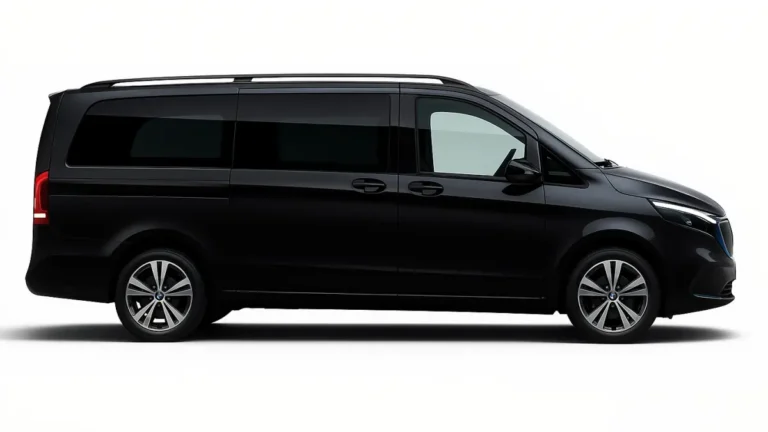
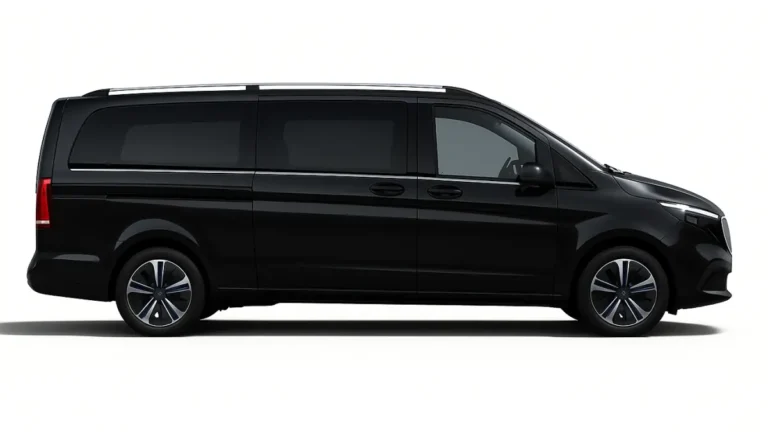
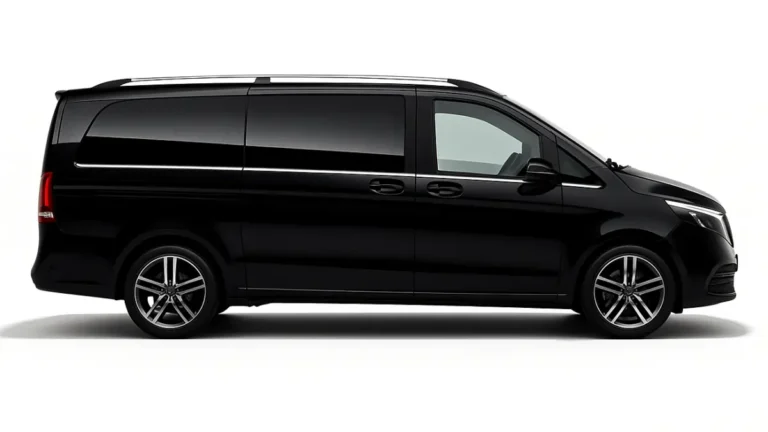
An MPV is the “one plan” option: one pickup, confirmed space for passengers and gear, and direct travel to the best practical drop-off point.
For teams, it protects warm-up time. For marathon travel, it reduces stress before and after the race. For fan groups, it keeps everyone together
with organised seating and bags.
Quick decision rule for sports days
If you’re light and independent, public transport can work. If you want group control, gear capacity, and predictable timing, an MPV transfer
is usually the simplest choice.
How our sports MPV transfers work in Berlin (timing, gear, group control)
A sports-ready transfer is built around three priorities: arrival windows, gear reality, and clear meeting points.
The goal is to remove travel-day decision-making so the team or group can focus on the event.
Teams: arrival built around call time, warm-up, and equipment loading
For squads, we plan backwards from your required arrival time and include buffer for gear handling. We confirm passenger count, kit bags,
and any bulky items so loading is fast and the cabin stays organised. If you have multiple drop-offs (hotel, venue, training ground),
we structure the sequence clearly.
Marathons: simple pre-race drop-off and clear post-race pickup
For runners, the pre-race priority is calm arrival with minimal walking and no confusion. Post-race, the priority is a clear pickup plan
that works even when phones are low and crowds are dense. We recommend one main contact person and a defined meeting strategy so the pickup
doesn’t turn into searching.
Fans: group travel with a clean plan in and out
For fan groups, the main win is staying together and avoiding “we’ll meet there”. We plan a sensible drop-off point, agree a return pickup time,
and keep luggage or banners organised so the ride remains comfortable. If the day includes a restaurant stop or a second venue,
stops are confirmed in advance so timing stays predictable.
One contact, one channel, fewer misunderstandings
For all sports travel, we recommend one coordinator (phone/WhatsApp) to keep communication clean. It prevents mixed messages and helps adjust
timing smoothly if something shifts.
Practical checklist for sports transfers (copy and use)
Copy this checklist into your booking message. It’s designed for sports teams, marathon weekends, and fan groups in Berlin and helps confirm
timing and capacity without back-and-forth.
- Event type: team match / tournament / marathon / fan group travel + date.
- Schedule goal: “arrive by” time (call time, warm-up start, start wave, kickoff).
- Route: pickup address + destination address (postcode) + any required entrance/meeting point notes.
- Passengers: number of people travelling together (and whether everyone must arrive as one group).
- Gear and bags: kit bags, medical bags, banners, instruments, bulky items (estimate quantity).
- Stops: any planned stops in order (drop-and-go vs short waiting — write the rule).
- Return plan: pickup time window after the event (especially important for fans and post-race pickups).
- Mobility needs: any injured/tired runners, older guests, or low-walking tolerance.
- Contact person: one phone/WhatsApp number reachable on the day.
- Flex note: confirm whether timing is fixed or adjustable within a range.
With these details, the sports transfer becomes a clear plan: correct vehicle capacity, realistic timing buffers, and a pickup strategy that works on busy event days.
How to confirm a smooth sports travel plan in one message
Send the checklist once — and your sports day becomes predictable
Sports travel works best when nobody is improvising outside a venue or after a finish line. If you want a smooth MPV transfer for a team,
marathon day, or a fan group in Berlin, send your schedule goal, passenger count, gear list, and route details using the checklist above.
That allows the plan to be confirmed clearly and keeps the day focused on the event — not on logistics.
Your next step: share your event date, “arrive by” time, pickup address, destination details, passenger count, and gear notes.
We’ll confirm a sports-ready MPV transfer plan so your group moves through Berlin calmly and on time.