Introduction: the fastest way to BER is the one with the fewest “unknowns”
When you’re heading to Berlin Brandenburg Airport (BER), most lost time doesn’t come from the drive itself. It comes from small uncertainties:
waiting for a vehicle, loading luggage that doesn’t fit cleanly, realising the group isn’t ready, stopping at the wrong terminal entrance,
or arriving stressed because your buffer evaporated. A well-planned MPV (people carrier) transfer saves time by turning your departure
into one predictable plan.
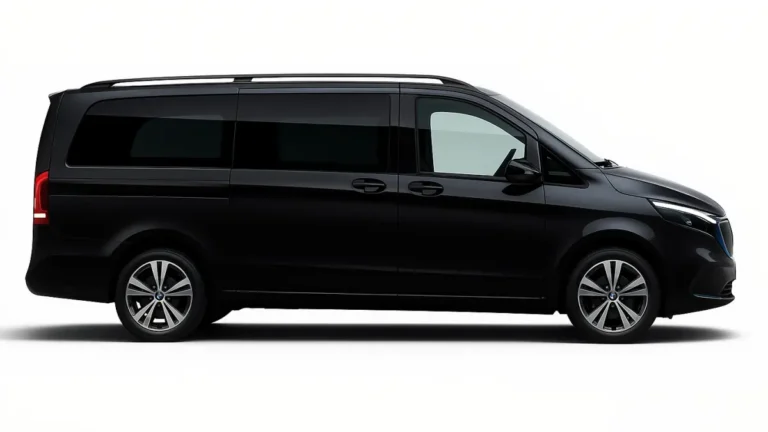
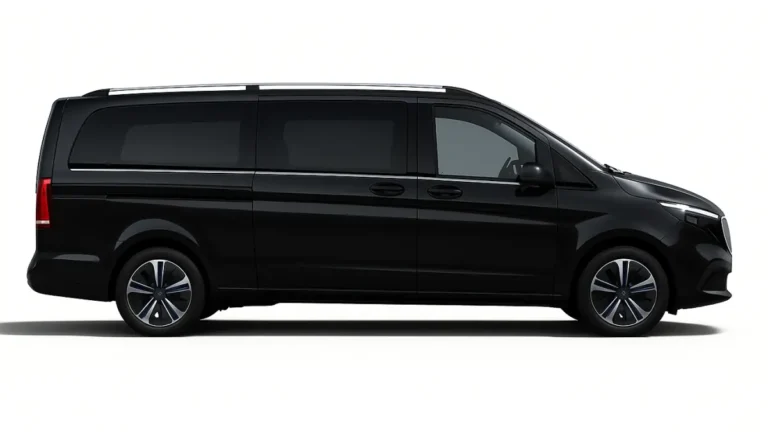
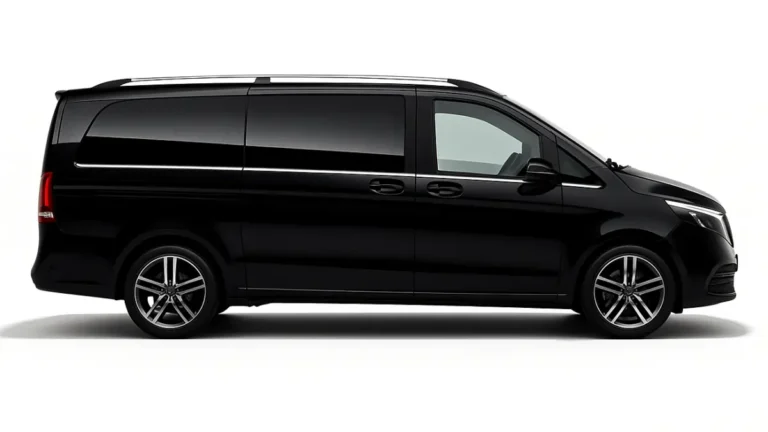
This guide shows how to save time when departing BER with an MPV: the common time-wasters, when an MPV beats public transport or a standard taxi,
how a “departure-ready” setup is organised, and a practical checklist you can copy before your next airport run.
Where time is usually lost on the way to BER
Airport departures are sensitive to chain reactions. One small delay creates a bigger one later: a missed train, extra walking inside the terminal,
rushed packing, or a stressful security line. These are the most common “hidden” time losses.
Scenario 1: the pickup happens on time, but nobody is actually ready
For families and groups, the planned departure time is often optimistic. Someone is still packing, a passport is missing, a child needs the toilet,
luggage isn’t zipped, or you’re still paying at reception. Those five minutes matter because they steal buffer time you can’t easily recover later.
Scenario 2: you start waiting and lose control of the schedule
The moment you’re waiting—on a platform, for a taxi, for a connection—you’ve handed your schedule to outside factors.
Even if the delay is small, it changes your mental state: you stop thinking calmly and start “calculating”. A time-saving plan minimises waiting steps.
Scenario 3: luggage creates slow movement at every step
Heavy luggage makes every transition slower: lifts, corridors, doors, station walks, and the final push into the terminal.
If your route includes multiple segments, your walking speed becomes the limiting factor. Direct door-to-door travel removes many of these slow moments.
Scenario 4: you arrive at BER but lose time at the last minute
Being “at the airport” is not the same as being at the right entrance, check-in area, or security queue.
If you’re dropped off inconveniently, you add extra walking with bags at the worst time. For tight schedules, the last 10 minutes can decide everything.
Scenario 5: small airport tasks weren’t done before leaving
A surprising number of late arrivals come from non-transport issues: boarding passes not ready, liquids packed incorrectly, power bank questions,
or confusion about where to go next. The fastest transfers still fail when the “pre-flight basics” are left for the final moment.
Scenario 6: “one quick stop” quietly breaks the timing
A quick stop for coffee, cash, or a forgotten item often turns into a detour, a parking issue, or a longer-than-expected wait.
On departure day, extra stops must be planned—otherwise they’re the easiest way to lose control of your buffer.
MPV vs taxi vs public transport: what actually saves time
The “fastest” option on paper isn’t always the fastest in real travel conditions. What saves time is predictability and fewer steps,
especially when you have luggage, children, or a strict schedule.
Public transport: efficient when connections line up, risky when they don’t
Public transport can be quick if you travel light and you catch the right connection. The time risk is missed links and extra walking:
you can lose more time from one slip than you ever saved from a slightly faster ride.
Standard taxi: simple when it’s available, uncertain for groups and luggage
A taxi can be a great quick solution for a simple ride. But availability, vehicle size, and loading comfort are not always guaranteed at the exact moment you need them.
If you have a group, you may end up splitting and coordinating, which often costs more time than expected.
MPV (people carrier) transfer: time savings through one controlled plan
An MPV transfer is usually the most time-efficient option when you want to remove uncertainty: one pickup, one vehicle that fits your passengers and luggage,
and direct travel to the right airport drop-off point. The time saved is often not “faster driving” but fewer transitions, less waiting, and calmer loading.
Quick decision rule
If you’re travelling light with flexible timing, public transport can work well. If you need guaranteed space, minimal steps, and a stable schedule,
an MPV transfer is often the quickest and calmest choice.
How we plan MPV departures to BER for speed and predictability
A good departure transfer is planned backwards from your goal: when you want to be at BER, not when you want to leave the hotel.
We focus on the details that prevent last-minute friction.
Pickup time is built around your “arrive at BER by” target
Instead of guessing, we use your flight time and your preferred arrival buffer to confirm a pickup time that protects your schedule.
This matters most for early flights, busy days, families, and business travellers who can’t afford uncertainty.
Vehicle fit is confirmed so loading stays fast
When the MPV matches your real luggage volume, loading is quick and organised. You avoid repacking on the street, bags on seats,
and the “it will probably fit” stress that wastes minutes you can’t get back.
Group coordination is simplified with one contact person
For groups, we recommend one coordinator and one communication channel. It prevents mixed messages and helps the pickup depart on time,
especially when multiple travellers are leaving from a hotel lobby or apartment building.
Drop-off is treated as “correct entrance”, not just “airport address”
The final time-saver is arriving in the most practical place for your next step inside the terminal.
This reduces unnecessary walking and helps you transition quickly from the vehicle to check-in or security.
Practical time-saving checklist before leaving for BER
Use this checklist to remove the most common departure-day delays. It’s designed to keep the transfer fast, predictable, and calm.
- Set a real “ready time”: choose a time when everyone is already downstairs with luggage, not when packing is still happening.
- Define your airport goal: when do you want to be at the BER terminal entrance (not just “flight time”).
- Share passengers + luggage: include bulky items so the MPV size is correct and loading stays quick.
- Keep essentials accessible: passports, boarding passes, chargers, medicines—never buried in large suitcases.
- Do a quick pre-flight check: online check-in done, liquids organised, devices ready, key documents easy to reach.
- Agree on stops: avoid surprise detours; if a stop is needed, confirm it in advance so timing stays realistic.
- Use one main contact: one phone/WhatsApp number reachable during pickup and en route.
- Plan the last 10 minutes: know the destination drop-off point strategy so you enter the terminal smoothly.
If you handle these points before you leave, the transfer becomes straightforward: quick loading, direct route, and a calm arrival at BER.
How to lock in a calm, on-time airport plan
Tell us your flight time and your “arrive by” target — and we’ll build the plan backwards
If you want to save time on departure day, the biggest win is removing uncertainty. Share your pickup address, flight time,
desired arrival time at BER, passenger count, and luggage details. That allows a clean pickup time and the right MPV setup to be confirmed
before travel day—so you’re not relying on last-minute decisions.
Your next step: send your pickup location, flight time, “arrive at BER by” goal, passenger count, and luggage list.
We’ll confirm a time-efficient MPV transfer plan so your departure from Berlin stays calm and on schedule.